
The Effects of Blue Light on Pigmentation: Mechanisms and Scientific Evidence
Blue light represents the wavelength range between 400–500 nm within the visible spectrum, with the 400–450 nm interval being defined as high-energy visible (HEV) light. While sunlight naturally emits blue light, modern exposure sources include digital devices such as computers, smartphones, tablets, and LED-based displays. As device use has increased, the dermatological effects of blue light have become a subject of extensive scientific investigation.
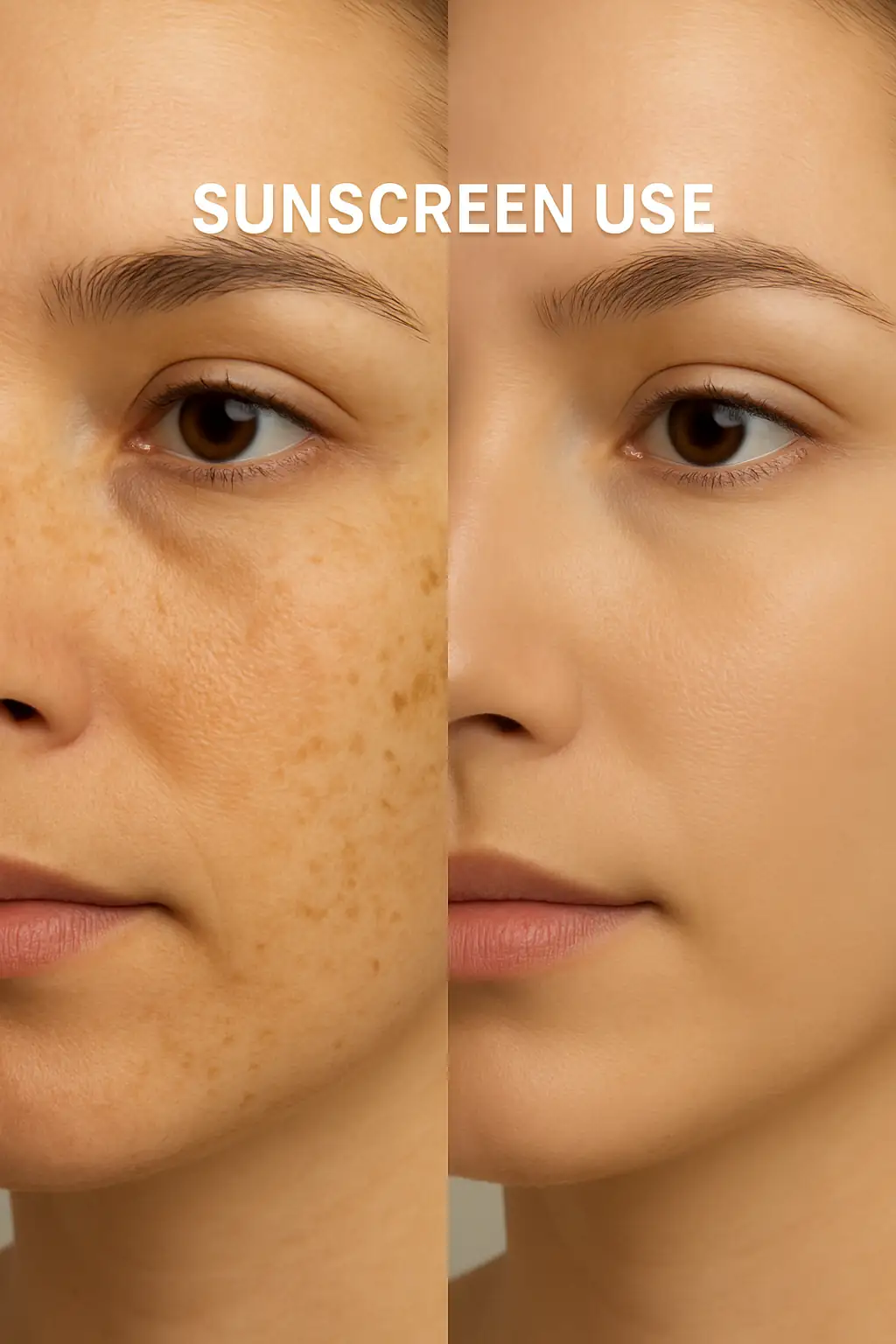
Pigmentation formation is largely driven by the biological activation of melanocytes. Melanocytes are located in the basal layer of the epidermis and synthesize melanin via the enzyme tyrosinase. Blue light affects melanocytes through two major mechanisms: by directly increasing enzymatic activity and by indirectly stimulating melanogenesis through oxidative stress.
Studies show that exposure to blue light increases intracellular reactive oxygen species (ROS). Elevated ROS stimulates tyrosinase, accelerating melanin production and leading to irregular pigment distribution. This effect is particularly noticeable in darker Fitzpatrick phototypes (III–IV). Research demonstrates that melanin deposits induced by blue light remain longer than those induced by ultraviolet radiation, due to prolonged retention of melanin granules in the epidermis.
Another notable mechanism involves the inflammatory response. When melanocytes are stimulated by inflammatory cytokines, gene expression related to pigment production increases. Upregulation of cytokines such as IL-1α, IL-6, and TNF-α has been associated with irregular pigment deposition. Consequently, blue light exposure not only facilitates new pigment formation but also intensifies the visibility of pre-existing hyperpigmentation.
Recent cell-culture research has shown increased levels of 8-OHdG, a biomarker of oxidative DNA damage, in keratinocytes and melanocytes after blue light exposure. This supports the hypothesis that chronic exposure may impair cellular turnover, prolonging pigment persistence. Additionally, blue light has been reported to decrease collagen synthesis in fibroblasts, indirectly contributing to more pronounced pigmentary alteration.
Because digital screens are commonly positioned in close proximity to the face, exposure duration tends to be long and spatially concentrated. This explains why hyperpigmentation more frequently appears on the forehead, cheekbone area, cheeks, and nasal bridge. Although blue light does not cause acute skin damage to the same extent as UV radiation, repeated exposure significantly impacts pigment biology over time.
In summary, scientific data support that blue light alters melanocyte activity, increases oxidative stress, enhances tyrosinase activation, and accelerates melanin synthesis. Therefore, chronic exposure to blue light may contribute to increased pigment irregularities and the intensification of facial hyperpigmentation.
References
Duteil, L. et al. (2019). “A Short Exposure to Blue Light (453 nm) Increases Melanin Synthesis in Skin Cells.” Journal of Investigative Dermatology.
Liebel, F., Kaur, S., Ruvolo, E., & Southall, M. (2012). “Blue Light Activates Oxidative Stress Pathways in Human Skin.” Journal of Biological Chemistry.
Mahmoud, B. H., Hexsel, C. L., Liu, Y., Owen, M. R., & Kollias, N. (2008). “Impact of Visible Light on Skin Pigmentation.” Journal of the American Academy of Dermatology.
Regazzetti, C. et al. (2018). “Visible Light Acts as a Stressor on Skin Pigmentation.” Pigment Cell & Melanoma Research.
Nakashima, Y., Ohta, S., & Wolf, A. M. (2017). “Blue Light-Induced Oxidative Stress and DNA Damage in Skin Cells.” Photochemistry and Photobiology.
Schalka, S., & Steiner, D. (2020). “High-Energy Visible Light and Pigmentation Disorders.” International Journal of Dermatology.